


PDM
Prevent machine failures with explitia.PDM
Machine learning predictive maintenance for stable production
Monitor machine condition, detect early warning signals and plan maintenance before breakdowns disrupt production.

What is explitia.PDM?
explitia.PDM is machine learning predictive maintenance software that analyses real-time machine data, detects anomalies and supports maintenance planning before failures occur.

Real-time condition monitoring
Continuously monitor machines and production lines.

Anomaly detection
Identify deviations before they lead to failures.

Component wear analysis
Detect parts that may require service or replacement.

Maintenance prediction
Estimate the right time for planned intervention.
The effects of predictive maintenance
Improve machine reliability with technical data, early warnings and production context.
-
Benefits for your production plant
-
Monitor machine condition continuously.
-
Detect anomalies at an early stage.
-
Estimate the remaining useful life of components.
-
Reduce the risk of unplanned downtime.
-
Connect technical data with production results.
-
Shift from reactive maintenance to data-based decisions.

React before a small disruption becomes a production loss

Fewer unexpected failures
Detect risks before production stops.

Lower maintenance costs
Replace components based on their actual condition.

Higher equipment reliability
Gain continuous visibility into machine health.

Better production planning
Plan maintenance windows with greater confidence.
How does explitia.PDM work?

1. Machine data collection
The system collects operational data from PLC controllers, IoT sensors, SCADA systems, MES platforms and sensors measuring vibration, temperature, pressure or energy use.


2. Machine learning analysis
Machine learning models learn typical equipment behaviour, detect deviations and identify patterns that may precede failures.


3. Early warning alerts
When abnormal behaviour is detected, the system indicates the machine at risk, the type of anomaly and its urgency.


4. Maintenance planning
Maintenance teams can plan interventions during scheduled downtime instead of reacting to emergency breakdowns.
opis czy cośtam
What does explitia.PDM include?

Machine condition monitoring


Industrial data collection


Machine learning analysis


Alerts and notifications


Component life analysis


Predictive reports


Machine condition monitoring
-
Real-time machine data
-
Production line monitoring
-
Continuous condition analysis
Discover other modules of the Production Portal
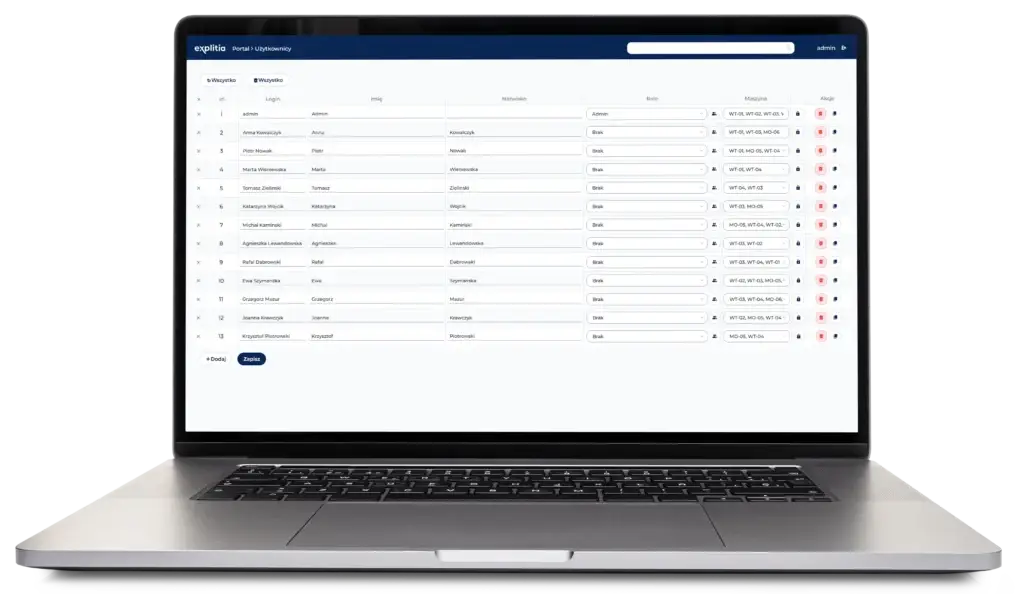


Industrial data collection
-
PLC and IoT sensor integration
-
SCADA and MES data
-
Vibration, temperature and pressure measurements
Discover other modules of the Production Portal
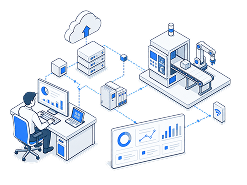


Machine learning analysis
-
Standard behaviour modelling
-
Deviation detection
-
Failure pattern identification
Discover other modules of the Production Portal
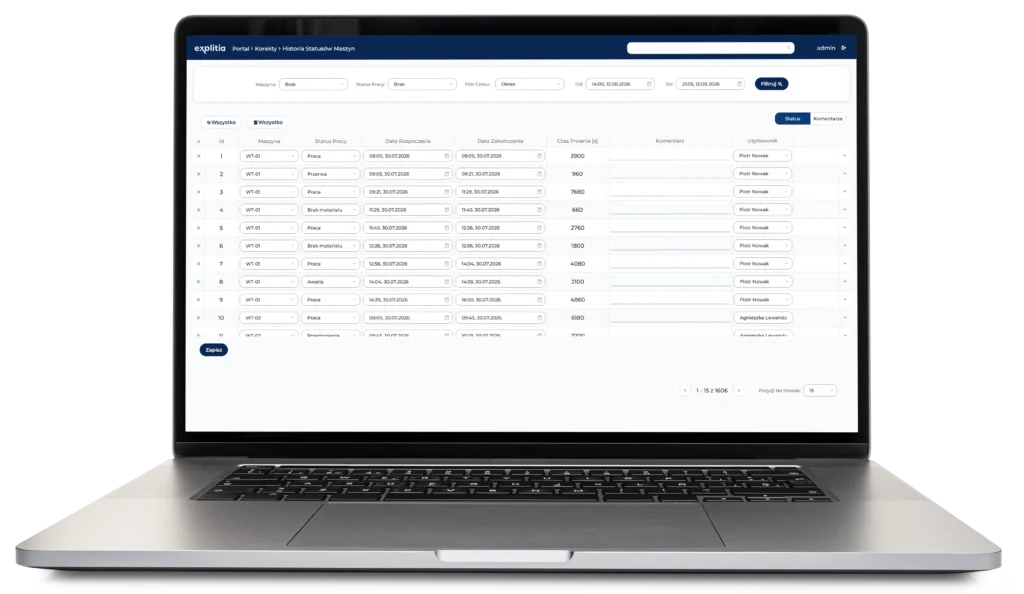


Alerts and notifications
-
Machine risk identification
-
Anomaly classification
-
Urgency assessment
Discover other modules of the Production Portal
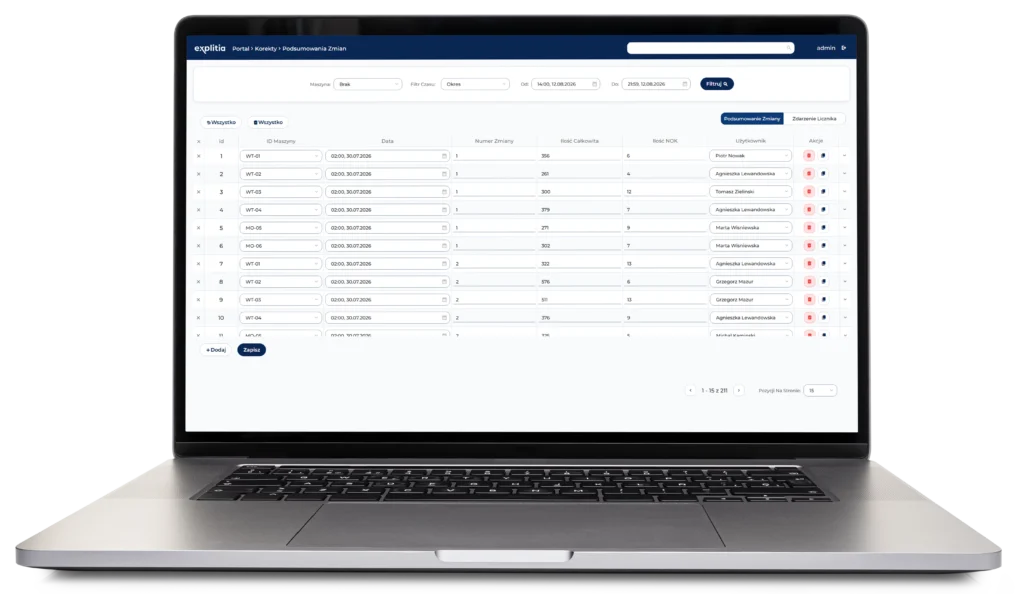


Component life analysis
-
Wear trend monitoring
-
Remaining useful life estimates
-
Service and replacement support
Discover other modules of the Production Portal
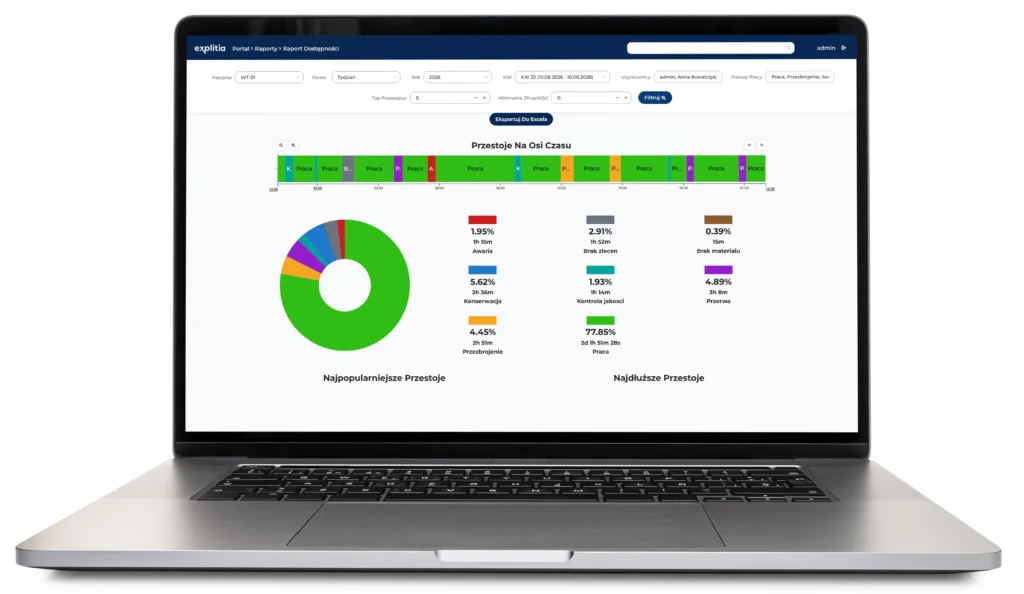


Predictive reports
-
Alarm history
-
Equipment life analysis
-
Management reports
Discover other modules of the Production Portal
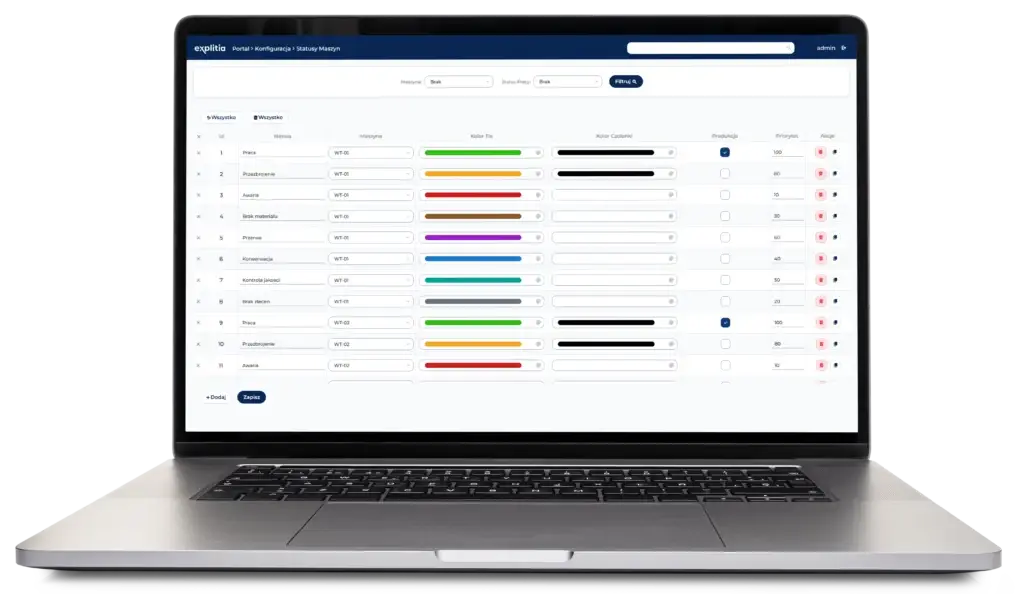

Integrations

PLC controllers

IoT sensors

SCADA systems

MES platforms

OEE monitoring

CMMS systems

Traceability systems
These connections help analyse how technical condition affects equipment availability, efficiency, output, product quality and costs.
Industry
Learn how a PDM works
Learn how a PDM system works

Scale
1 plant, 6 production lines
-
Reduced unplanned failures by up to 80%
-
Plan pump replacement outside production time
-
Transfer anomaly alerts directly to CMMS

up to €72,000
Annual savings

up to 80%
Fewer unplanned failures

50 ms
Vibration data frequency
Elements of explitia.PDM

Data Collection
Collects real-time data from machines, controllers and industrial sensors.

Condition Monitoring
Provides continuous visibility into machine and component health.

Anomaly Detection
Identifies deviations from standard operating conditions.

Failure Prediction
Recognises patterns that may indicate an upcoming failure.

Maintenance Alerts
Provides information about detected risks and their urgency.

Predictive Analytics
Analyses equipment life, wear trends and historical alarms.

Production Context
Connects technical condition with availability, performance, quality and costs.
FAQ: Machine Learning Predictive Maintenance
Machine learning predictive maintenance uses operational data and intelligent algorithms to assess the actual technical condition of machines and detect potential problems before breakdowns occur.
Scheduled maintenance is performed at fixed intervals. Predictive maintenance uses actual machine behaviour and condition data to determine when intervention may be required.
The system can collect data from PLC controllers, IoT sensors, SCADA systems, MES platforms and sensors measuring vibration, temperature, pressure and energy use.
The system learns typical machine behaviour and identifies deviations from standard operating conditions or patterns that have historically preceded failures.
Alerts can indicate which machine is at risk, what type of anomaly has been detected and how urgent the situation is.
Yes. It can analyse equipment life, wear trends and the estimated remaining useful life of key parts.
Yes. Earlier warning of potential technical problems allows maintenance activities to be coordinated with production schedules.
Yes. Combining machine condition data with OEE analysis helps identify the technical causes of availability and performance losses.
Yes. Information about deteriorating equipment condition can support service activities and maintenance intervention planning.
Yes. explitia.PDM can operate as a standalone solution or as part of the wider Production Portal environment.
Implementation may include machine park analysis, assessment of available data, a pilot deployment, model calibration, alert configuration, scaling and user training.
Yes. The system can first be tested on selected machines and then expanded to additional production lines, departments or facilities.
Improve machine reliability
Detect risks early and plan maintenance with real machine data.

Continuous monitoring
Track machine condition.

Early warnings
Detect anomalies sooner.

Planned maintenance
Schedule service confidently.