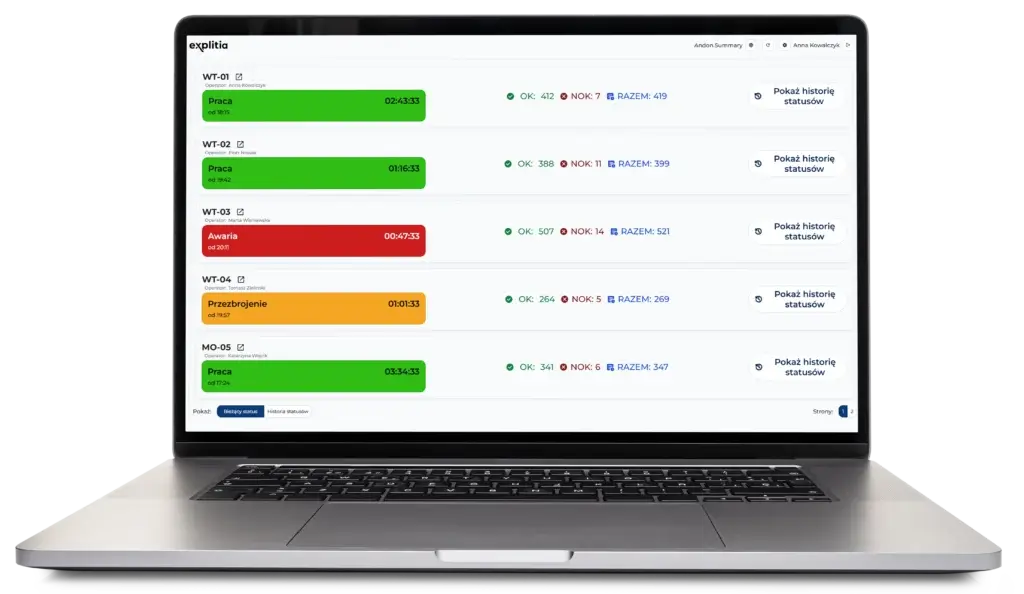



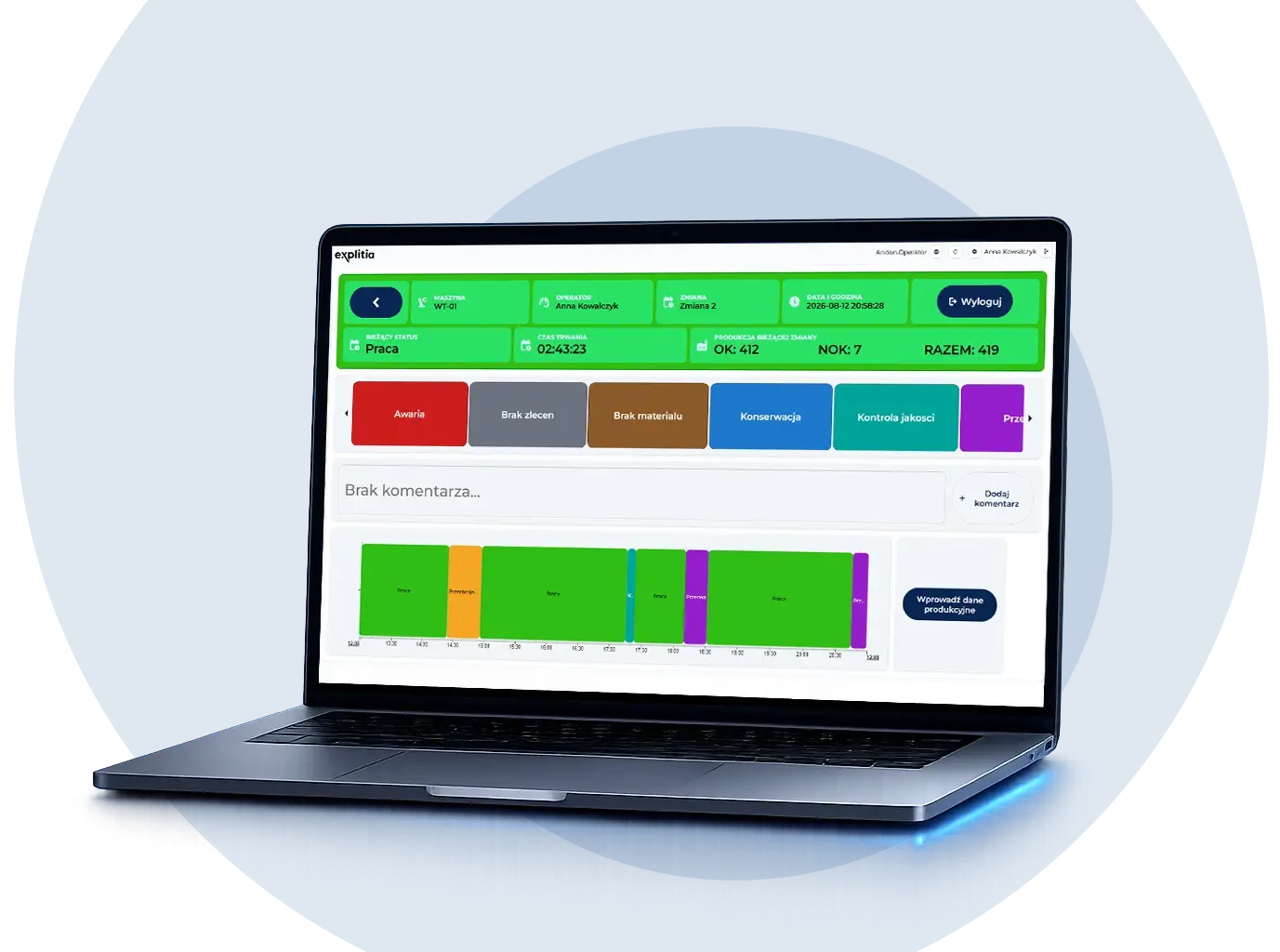
Forms module
Eliminate paper-based workflows with explitia.Forms
Digital forms for structured production data
Collect manual records in one digital environment and connect them with your wider production data.

What is explitia.Forms?
explitia.Forms is a digital forms module that collects manual production records and turns scattered entries into structured, accessible data.

Manual data collection
Record information that machines cannot collect automatically.

Digital production forms
Replace paper, spreadsheets and local files.

Structured records
Keep entries consistent, searchable and ready for analysis.

Connected data flow
Use manual records in reports, dashboards and production systems.
The effects of implementing digital production forms
Organize manual data collection and create a clearer flow of information across your production plant.
-
Benefits for your production plant
-
Collect manual data in one digital environment.
-
Reduce paper forms, spreadsheets and local files.
-
Make records available immediately after entry.
-
Connect operator input with reports and dashboards.
-
Improve information flow between different teams.

Bring manual records into the same flow as your automated production data.

Less paper
Replace printed forms and scattered local files.

Faster access
Find production records without manual searching.

More complete data
Fill gaps that automated systems cannot cover.

Better data consistency
Standardize entries for each task and process.
How does explitia.Forms work?

Open the form
The user opens the form assigned to the task.


Enter the data
Clear fields guide the user through the entry.


Save the record
The information is stored in a structured format.


Use the data
Records become available in reports and dashboards.
opis czy cośtam
What does explitia.Forms include?

Digital data entry


Form controls


Production records


Operational entries


Data accessibility


Connected information flow


Digital data entry
-
Forms for manual production records
-
Fields adapted to specific tasks
-
Entries made at the point of work
Discover other modules of the Production Portal
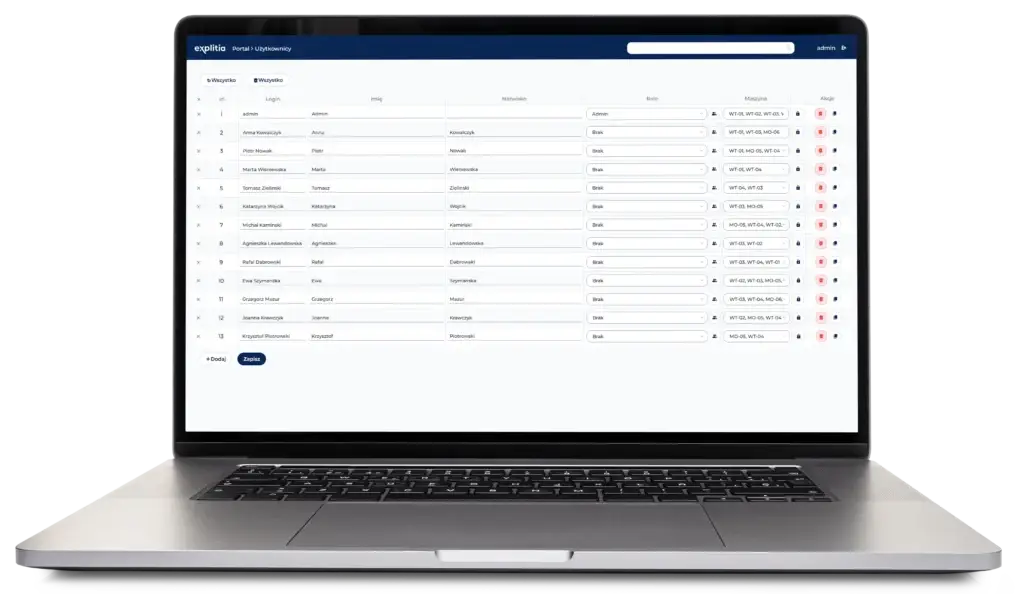


Form controls
-
Values, statuses and confirmations
-
Notes and process events
-
Fields adapted to user roles
Discover other modules of the Production Portal
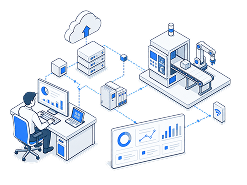


Production records
-
Operator confirmations
-
Technician readings
-
Quality control results
Discover other modules of the Production Portal
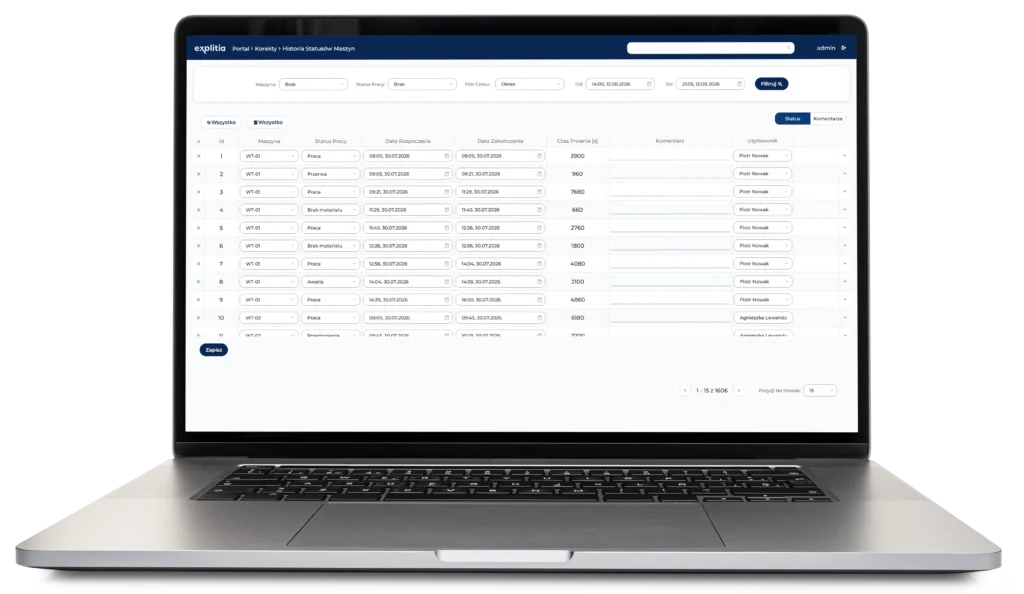


Operational entries
-
Warehouse status updates
-
Task completion records
-
Events requiring follow-up
Discover other modules of the Production Portal
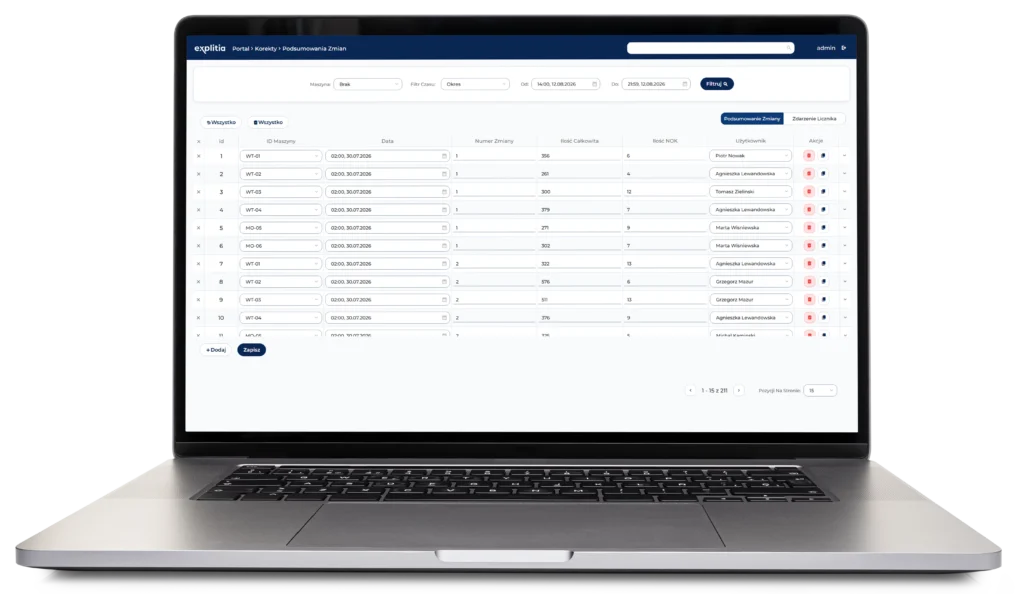


Data accessibility
-
Searchable digital records
-
Information available across teams
-
Data ready for review and analysis
Discover other modules of the Production Portal
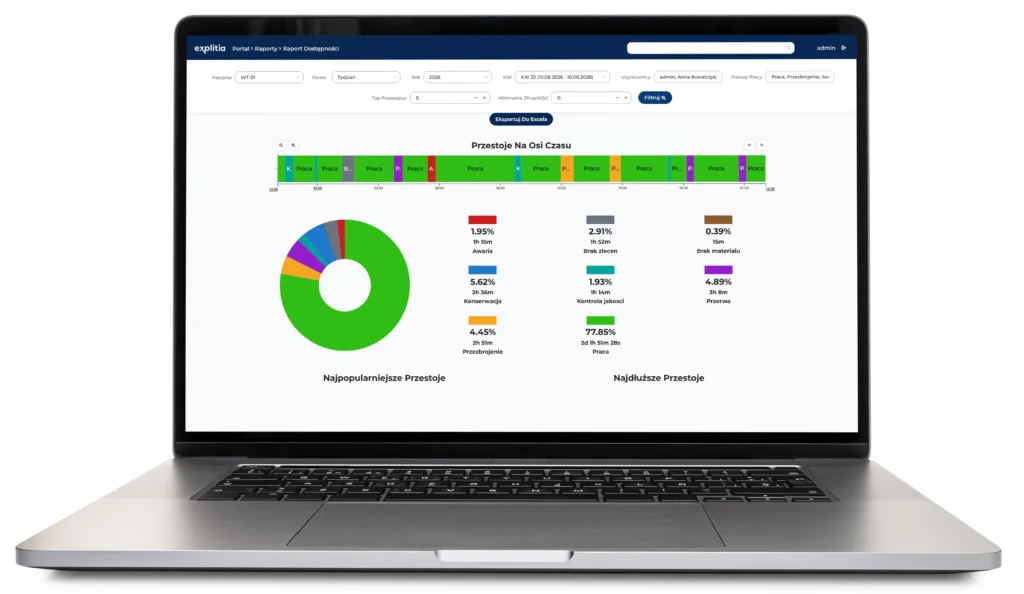


Reports and configuration
-
Reports and visual screens
-
Management dashboards
-
Links with wider production data
Discover other modules of the Production Portal

Integrations

Production Portal

Production reporting

Visual screens

Management dashboards

Office workflows

Quality processes

Traceability systems

Automated production data
explitia.Forms can operate as part of a wider production environment and complement data collected automatically.
Discover the benefits of production digitization

See how replacing paper records with digital information can improve productivity, data access and production management.
-
Replace paper documents with digital records
-
Give employees faster access to information
-
Reduce errors caused by missing or outdated data

Topic
Production digitization

Key areas
Data, documents, efficiency

Content type
Practical guide
Elements of explitia.Forms

Form Builder
Creates digital forms adapted to tasks, users and production stages.

Manual Data Entry
Collects information that cannot be registered automatically.

Structured Records
Stores manual entries in a consistent and searchable format.

Process Confirmations
Records completed tasks, checks, statuses and production events.

Data Visualization
Makes collected information available in reports and visual screens.

Production Context
Connects manual entries with automated and operational production data.

Cross-Team Access
Provides useful records to production, quality, office and management teams.
FAQ: Digital Forms for Production
Digital production forms replace paper documents, spreadsheets and local files with structured records entered directly into a digital system.
explitia.Forms is a module for collecting manual production data that cannot be registered automatically by machines or other systems.
Users can enter values, statuses, confirmations, quality results, readings, events, notes and other information required by the process.
Forms can be used by operators, technicians, quality employees, warehouse workers, supervisors and other people responsible for production processes.
Yes. Forms can include fields and controls selected for a particular task, production stage, workplace or user role.
Yes. It helps move manual records from paper, spreadsheets and local files into one structured digital environment.
Its primary role is to collect manual entries. It complements automated data collection by recording information that equipment cannot capture on its own.
Yes. Structured entries can be presented in reports, dashboards, visual screens and other system views.
Yes. Quality employees can use forms to record inspection results, parameters, statuses, deviations and other process information.
Yes. Warehouse employees can enter status updates, confirmations and other information required at different points in the material flow.
Yes. Manual entries can complement traceability records when complete product or process history depends on information provided by employees.
Yes. The collected information can support production, quality, warehouse operations, supervision, office work and management.
Replace scattered paper forms with structured data that is easier to enter, find and use.
[ikonka formularza]

Simple data entry
Use clear forms at the point of work.

One information flow
Connect manual and automated records.

Useful production data
Use entries in reports and dashboards.