


Extracting data from machines – explitia
Extracting Data from Machines
Build production IT systems on direct source data
explitia supports the complete process—from analyzing actual needs and creating an implementation roadmap to extracting data from machines, implementing an IT system and providing post-completion support.

What does extracting data from machines involve?
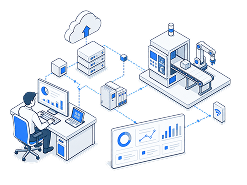
Extracting data from machines gives production IT systems access to information directly from industrial sources.

PLC controllers
Collect information stored and processed by machine controllers.

Sensors and actuators
Obtain measurements and signals directly from production equipment.

ERP and other IT systems
Use information already available in other systems operating in the plant.

Electrical signals
Acquire required data directly from available electrical signals.
The effects of extracting data from machines
Build production IT systems on data obtained directly from machines, sensors, actuators and other available sources.
-
Identify the signals and sources required by the IT system.
-
Check whether the required measurements exist.
-
Evaluate whether available measurements are sufficiently accurate.
-
Integrate information from several types of sources.
-
Use a common communication standard where possible.

Create a reliable data foundation for production IT systems.

Reliable source data
Use information obtained directly from production equipment and systems.

Integrated data sources
Combine information from different sources in one standardized model.

Appropriate automation
Automate data acquisition only where it has a business justification.

Engineering support
Use an interdisciplinary team to identify and acquire the required data correctly.
How does machine data acquisition work?

Analyze current processes
Begin with an analysis of the production processes and the existing technological environment.


Conduct a pre-implementation audit
Identify the actual challenges of the manufacturing plant during an audit and workshop.


Create an implementation roadmap
Define the planned system scope and the stages of implementation.


Identify data sources
Analyze documentation, signals and available measurements to determine where the required data can be obtained.


Plan data acquisition
Select the appropriate method for obtaining and integrating data from the available sources.


Implement and support the system
Implement the IT solution and provide support after the project has been completed.
opis czy cośtam
What does extracting data from machines include?

Process analysis and audit


Implementation roadmap


Integration of new machines


Signal and documentation analysis


Data source standardization


Manual data entry


Process analysis and audit
-
Analyze current production processes.
-
Identify the actual challenges of the plant.
-
Determine which data the planned IT system requires.
Discover the full explitia Production Platform


Implementation roadmap
-
Define the planned stages of implementation.
-
Prepare a machine data acquisition plan.
-
Connect data acquisition with the wider IT system project.
Discover the full explitia Production Platform


Integration of new machines
-
Consider integration requirements during machine software development.
-
Account for warranty restrictions.
-
Avoid unnecessary interference with protected software structures.
Discover the full explitia Production Platform
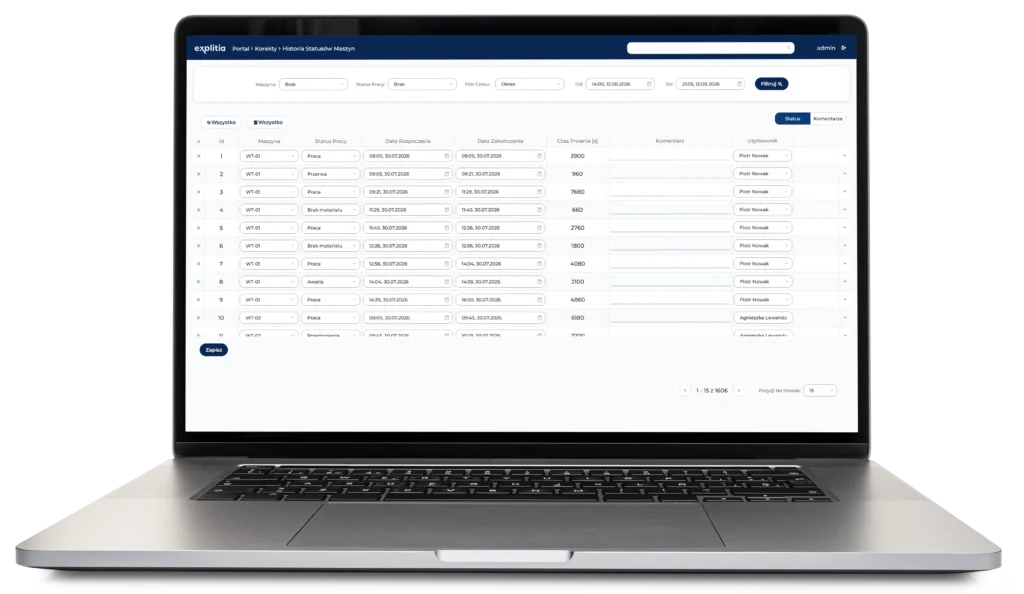


Signal and documentation analysis
-
Analyze software documentation.
-
Review electrical documentation.
-
Find the required signals and their sources.
Discover the full explitia Production Platform
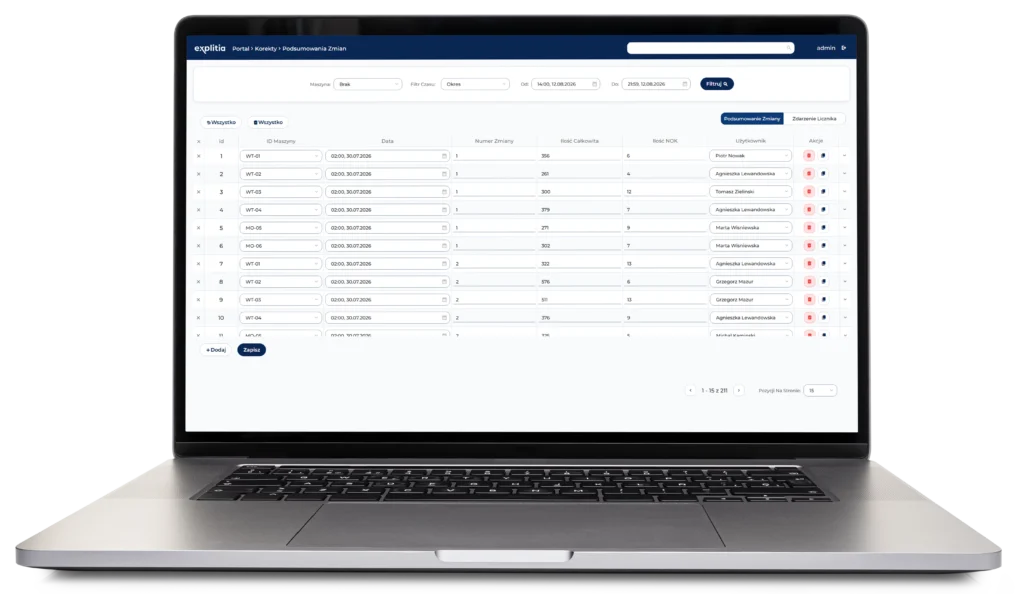


Data source standardization
-
Combine data from several different sources.
-
Create an intermediary layer between the sources and the IT system.
-
Use a common communication standard or a dedicated solution.
Discover the full explitia Production Platform
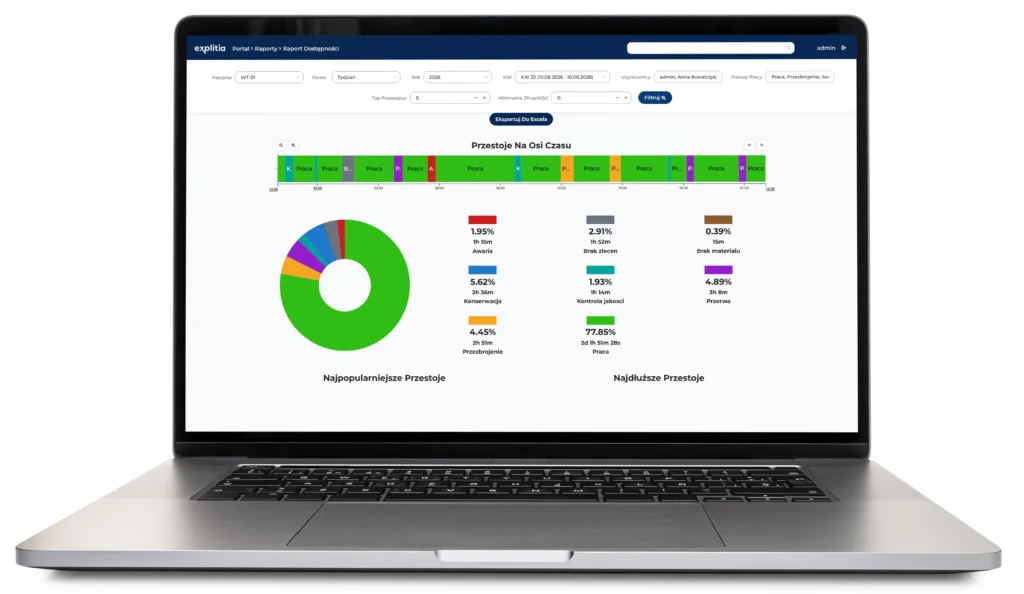


Manual data entry
-
Determine whether automation is commercially justified.
-
Identify values that should be entered manually.
-
Use system forms for manual data entry where required.
Discover the full explitia Production Platform

Data sources and integration methods

PLC controllers

Sensors

Actuators

ERP and other IT systems

Electrical signals

Software documentation

Electrical documentation

Common communication standards

Dedicated integration solutions
When the required data comes from different types of sources, it should be integrated into one standardized model before being transferred to the information system.
Machine Data Collection
Learn how to collect data from machines

See what is required to start collecting data from machines.
-
Select a data source, such as a sensor.
-
Use a PLC controller or I/O module.
-
Connect a computer or server.
-
Define the business purpose of data collection.

Topic
Machine data collection

Key areas
Data sources, PLC controllers, infrastructure, business objectives

Content type
Practical guide
Machine data acquisition elements

Process analysis
Determine which production processes and business needs the data should support.

Pre-implementation audit
Identify the actual challenges and technological conditions of the manufacturing plant.

Implementation roadmap
Plan the stages of data acquisition and IT system implementation.

Source identification
Locate the controllers, sensors, systems and electrical signals containing the required information.

Measurement verification
Check whether a required measurement exists and whether it is sufficiently accurate.

Signal mapping
Connect each required piece of information with its appropriate technical source.

Standardized data model
Combine information from different sources in one consistent structure.

Manual input forms
Allow users to enter values manually when automatic acquisition is not justified.
FAQ: Extracting Data from Machines
It should begin with an analysis of current processes and a pre-implementation audit. This helps identify the actual challenges of the plant and determine which data is required.
Data can be extracted from PLC controllers, sensors, actuators, electrical signals and other IT systems, including ERP.
Yes, but the need for integration should ideally be considered during the machine software development stage.
Yes. Interference with machine software may be restricted by warranty conditions, so integration requirements should be anticipated as early as possible.
It can involve reviewing software and electrical documentation, identifying the required signals and locating their sources.
The analysis identifies where a measurement is missing or insufficiently accurate, allowing the project team to plan the required changes.
Yes. Data from different sources can be integrated into one standardized model through an intermediary layer.
No. A common standard can often be used, but some projects require a dedicated integration solution.
No. The analysis should determine whether automation has a business justification. Some values may be entered manually.
Build Your System on Direct Machine Data
Start with process analysis, identify the required sources and select the right data acquisition method.

Direct source data
Use signals from machines and sensors.

Integrated sources
Standardize data from different systems.

Right automation scope
Automate where it adds value.